Skip to product information
1 of 5

Full-Body Red Light Bag

Olympus XL

About 20 square feet of skin, front and back, lit at once. That’s the size of a front door. Lie down for 20 minutes and let your mitochondria do the rest.

Regular price $1,249.00 USD
Regular price Sale price $1,249.00 USD
Sale Sold out
Shipping calculated at checkout.
6'5"

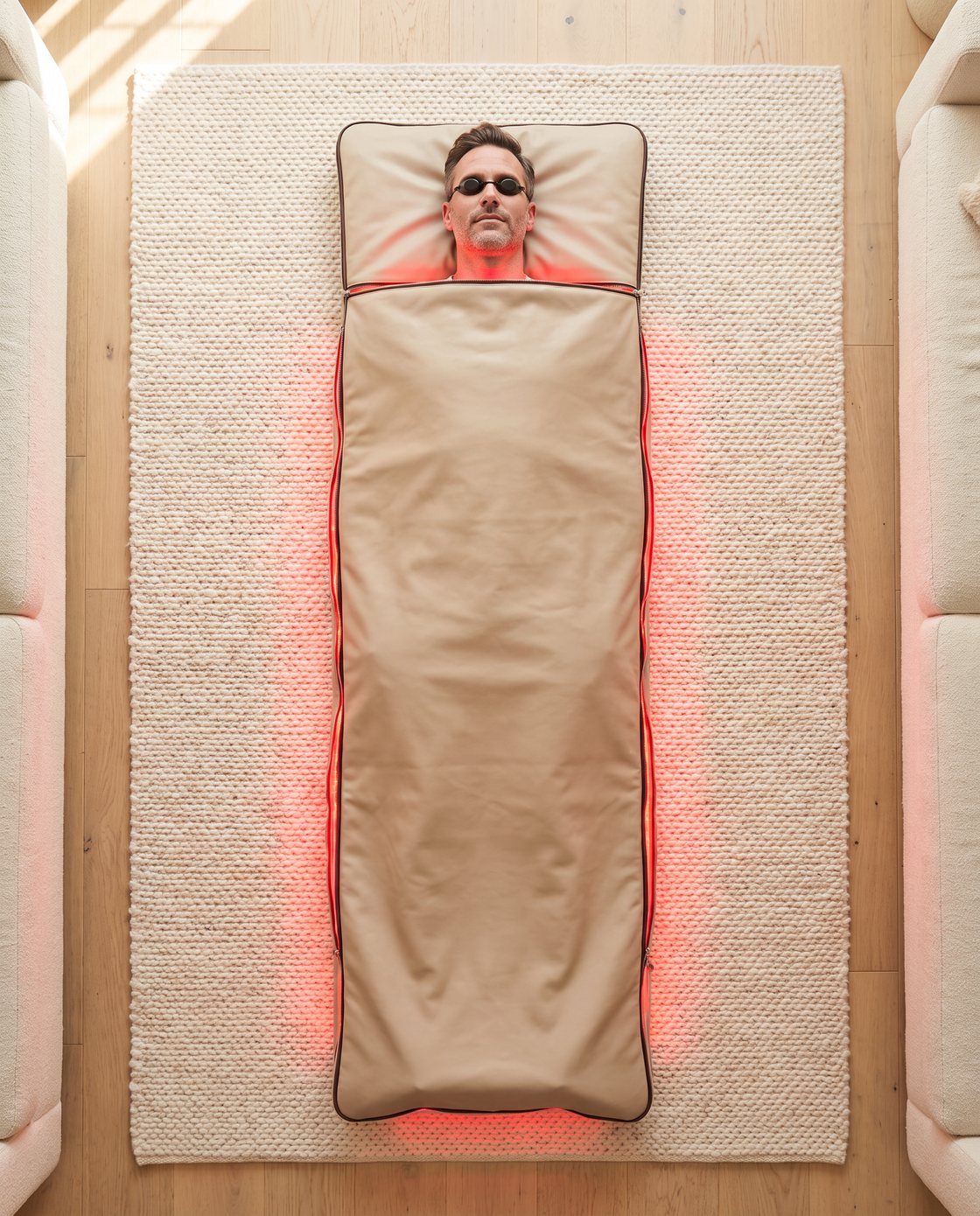
79 in. long, 35 in. wide. Tall and broad bodies zip all the way in, head to feet.

Free, tracked US shipping.

FreeUS shipping
30 daysto start a return
Shop PayPay over time

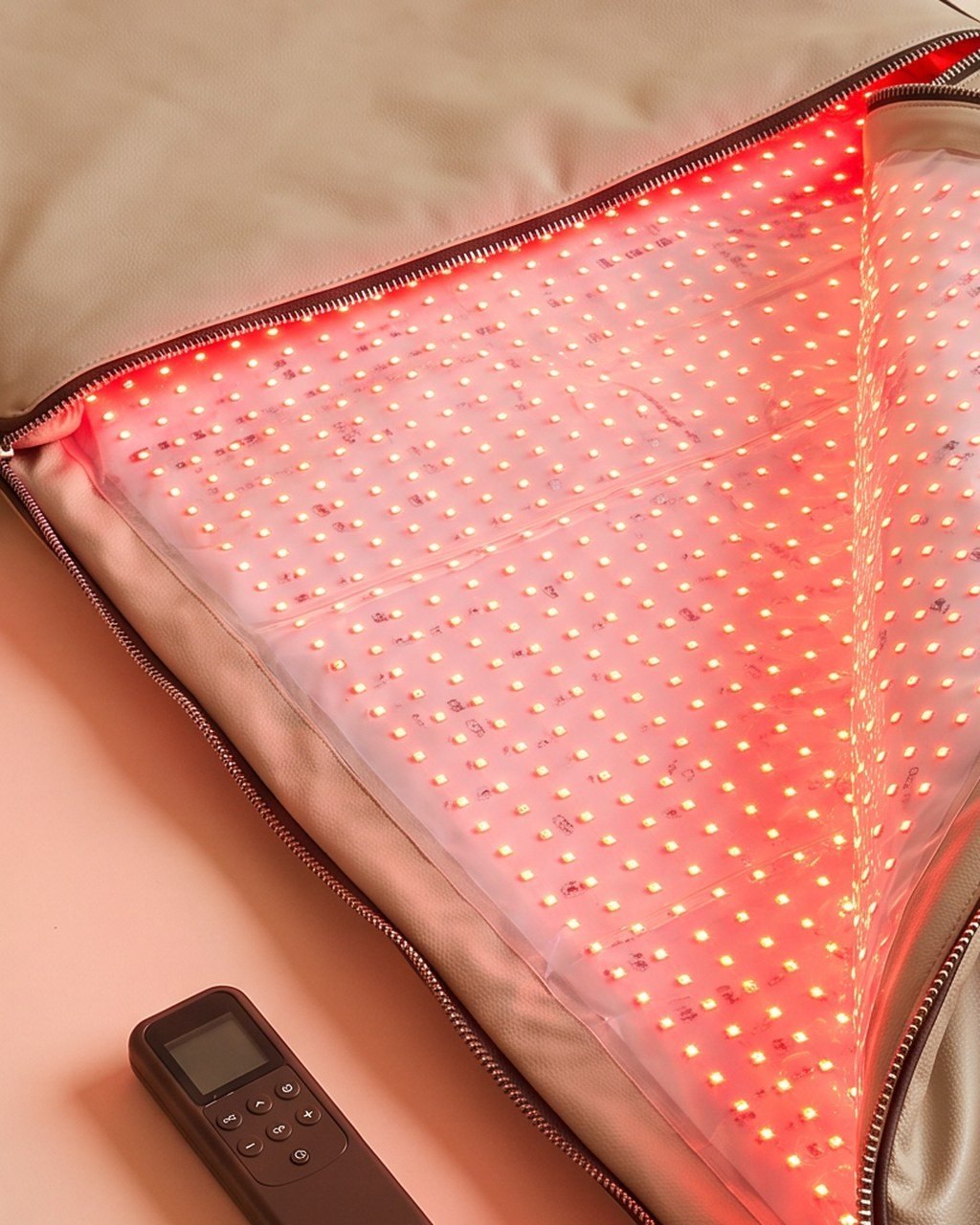
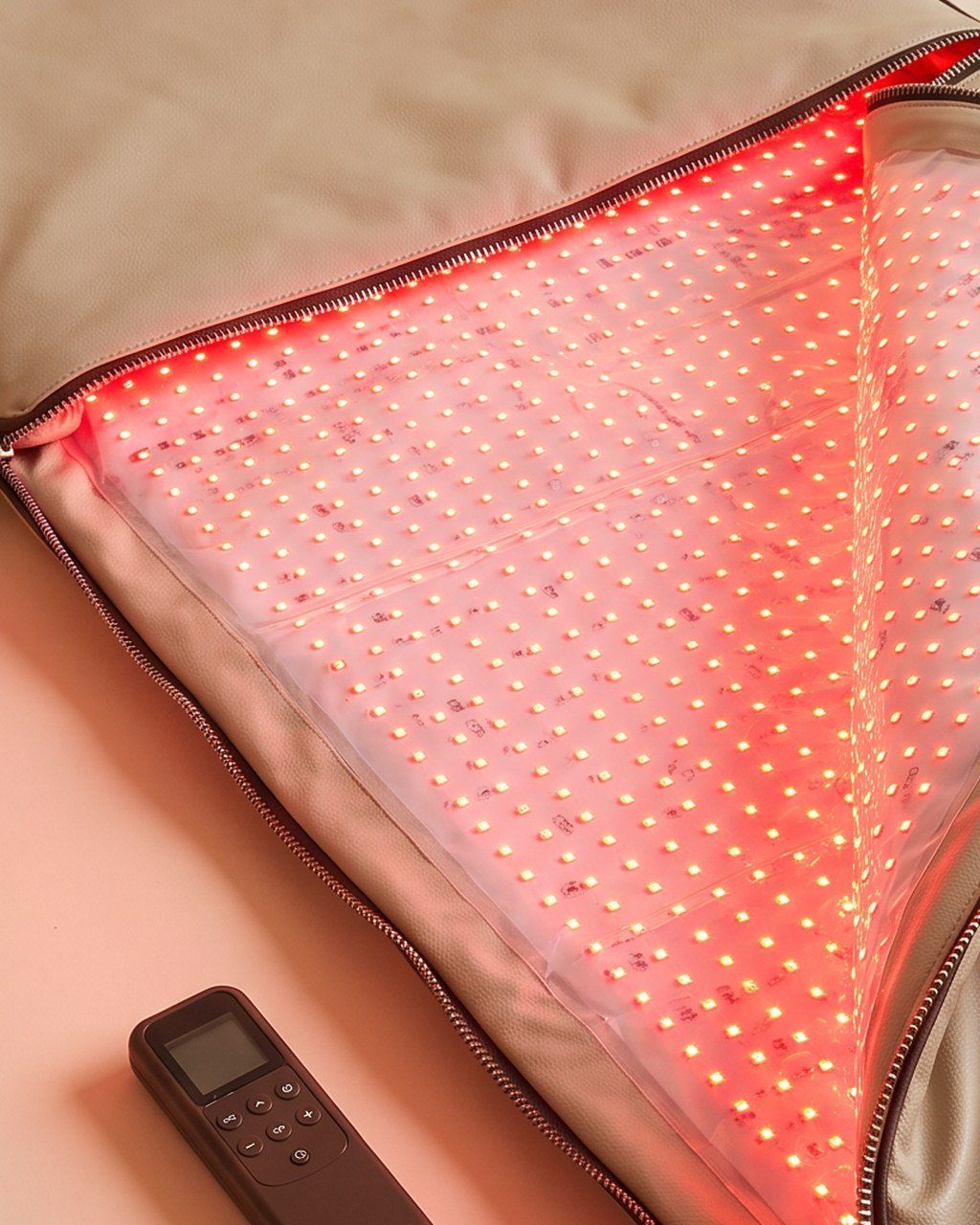
A full-body red light bag lined with red (660 nm) and near-infrared (850 nm) LEDs on both layers, so your front and back get light at the same time. At 79 inches long it fits up to 6'5", head to feet.

In the box

  • Olympus XL bag, 79 × 35 in
  • Controller: 3 modes, 5 intensity levels, 10–30 min timer
  • Face and neck pad
  • 2 pairs of light-blocking goggles
  • Carry and storage case

Specs

Wavelengths 660 nm + 850 nm
LED layers Front + back
Size 79 × 35 in
Fits Up to 6'5"
Modes Constant, 10 Hz, 40 Hz
Shell Sand vegan leather

Shipping

Orders ship within 1–3 business days. Standard US shipping is free and tracked (5–8 business days).

Returns

Start a return within 30 days of delivery by emailing info@tharsyn.com. Conditions are in our refund policy.

View full details
The 60-second science 37 trillion cells in your body

Every one of them runs on light-sensitive engines

Almost every one of your cells contains mitochondria, the power plants that turn food and oxygen into ATP, the energy your body spends on everything from blinking to rebuilding muscle.

One enzyme on that assembly line, cytochrome c oxidase, absorbs red and near-infrared light. That’s the whole idea behind red light therapy: a specific color, absorbed by a specific part of the cell.

Think of it like this

A solar panel bolted onto a power plant. Red light doesn’t add fuel. It helps the plant run the fuel it already has.

Bianconi et al. · Annals of Human Biology · 2013 · Karu · IUBMB Life · 2010

One session

Three jobs, twenty minutes

The light reaches every side of you at once, so a full-body session takes the time a face mask does.

Recovery

Back sooner after hard training

Creatine kinase is your muscles’ check-engine light: it leaks into your blood when fibers tear. A meta-analysis of controlled trials found light before exercise improved performance and lowered it.

Leal-Junior et al. · Lasers Med Sci · 2015
Skin

Collagen is the rebar in your skin

136 people used full-body red light units twice a week for 30 sessions. Ultrasound measured higher collagen density than in the control group.

Wunsch & Matuschka · Photomed Laser Surg · 2014

Wind-down

Red is the color of evening

Your eyes have a daylight sensor that’s most sensitive to blue light and barely notices red. That’s why a campfire feels like night and a phone feels like noon.

Brainard et al. · J Neurosci · 2001
epidermis dermis muscle 660 nm 850 nm

How it works

Two wavelengths, two depths

Light between roughly 650 and 1,350 nanometers sits in the body’s optical window: the range where blood and water absorb the least, so light travels the furthest. Longer wavelengths reach deeper.

660NM · RED

Absorbed in the top layers of skin. The wavelength used in most skin studies.

850NM · NEAR-IR

Invisible to you, and it travels further into tissue, toward muscle and joints.

Karu · IUBMB Life · 2010 · Ash et al. · Lasers Med Sci · 2017

Myth vs truth

What most people get wrong about red light

Myth

Red light is just a fancy heat lamp.

Truth

Heat is something you feel. The effect studied in red light therapy depends on color, not warmth: specific wavelengths get absorbed by one specific enzyme in your mitochondria. A space heater warms the room. It doesn’t change how your cells make energy.

Karu · IUBMB Life · 2010
Myth

If 20 minutes is good, an hour is better.

Truth

Light follows a biphasic dose response: too little does nothing, the right dose helps, and too much can cancel the benefit. It’s watering a plant, not filling a pool. Use the timer.

Huang et al. · Dose-Response · 2009
Myth

A wall panel does the same job.

Truth

Light obeys the inverse-square law: twice the distance, a quarter of the light. A panel also only reaches the side of you facing it. Lying inside the light, front and back, removes both problems.

Inverse-square law
79 in · 200 cm 6'5" · 196 cm, head to heel

Fit

Built for tall bodies

Your head, your shoulders and your feet are all inside the light. The three-sided zip opens flat, so you lie down instead of wriggling in.

Length
79 in / 200 cm
Width
35 in / 89 cm
Fits
up to 6'5"
Opens
3-sided zip, lies flat

Your protocol

Twenty minutes, three to five times a week

When

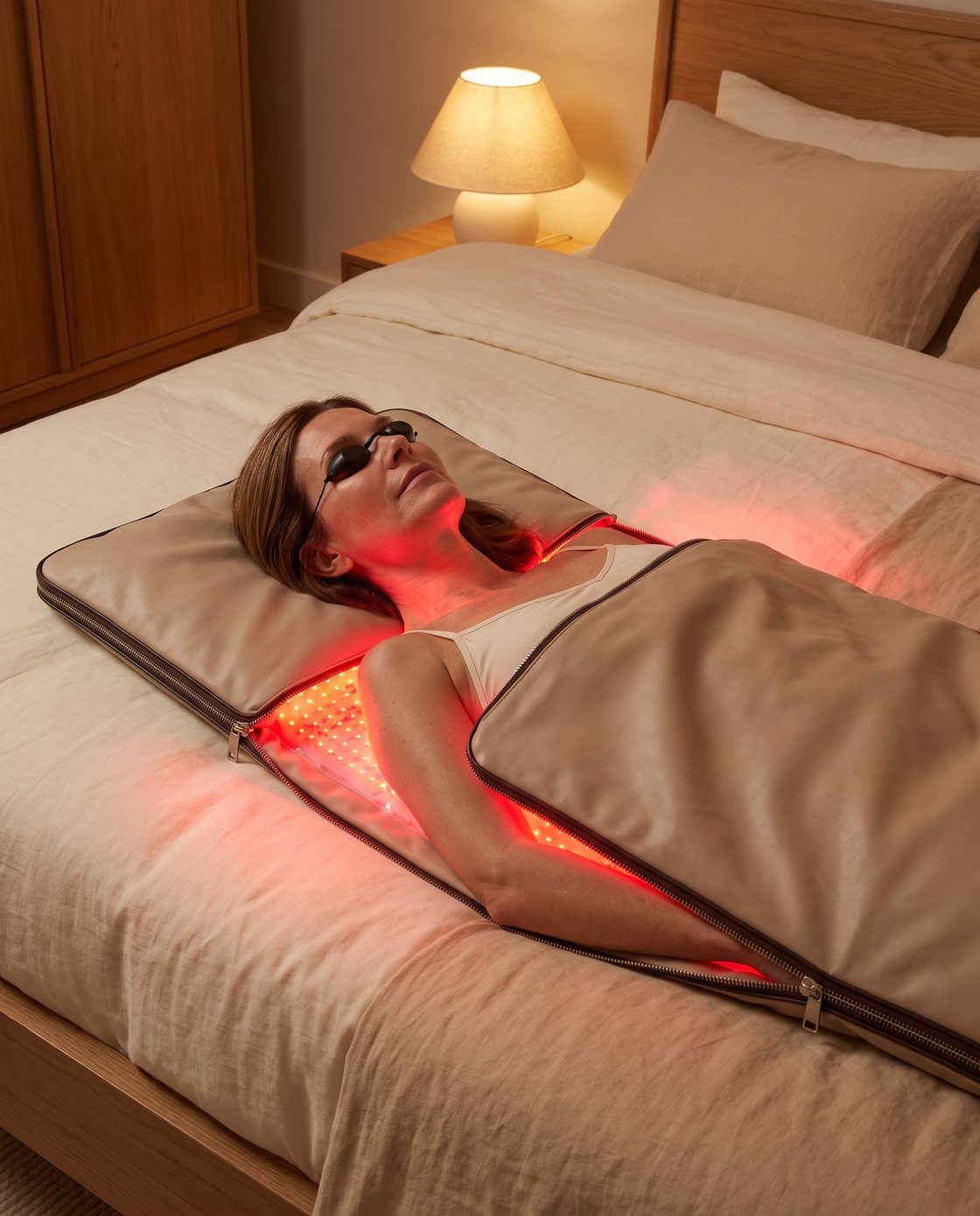
After training or before bed

Red light doesn’t trip your daylight sensor, so evening sessions fit right before sleep.

How long

10 to 20 minutes

Start on a low intensity level. The timer ends the session for you.

How often

3 to 5 sessions a week

The whole-body skin trial used two a week for 30 sessions. Consistency beats intensity.

The research

Named studies, not percentages

Every claim on this page points to a published paper. Here they are.

136

Whole-body red light and skin collagen

Full-body red light units, twice a week for 30 sessions. Skin complexion and roughness improved, and ultrasound measured higher collagen density than in the control group.

Wunsch & Matuschka · Photomedicine and Laser Surgery · 2014
Meta-analysis

Light therapy and exercise recovery

Pooled controlled trials: light applied before exercise improved performance and lowered creatine kinase, a blood marker of muscle damage.

Leal-Junior et al. · Lasers in Medical Science · 2015
Mechanism

The enzyme that absorbs red light

Cytochrome c oxidase, part of the energy chain inside your mitochondria, absorbs red and near-infrared light and changes how the cell makes energy.

Karu · IUBMB Life · 2010
446–477 nm

Why red light suits the evening

Mapped which colors suppress melatonin. The eye’s sensor peaks in the blue range; red wavelengths barely register with it.

Brainard et al. · Journal of Neuroscience · 2001

FAQ

Questions

I’m tall or broad. Will I fit?

Yes, up to 6'5". The bag is 79 inches long and 35 wide, and the zip runs around three sides so it opens flat and you lie down instead of squeezing in.

Does it get hot?

It feels warm, not hot. You can lower the intensity at any time.

Is it safe for my eyes?

The light is bright up close. Wear the included goggles, or keep your eyes closed when your face is lit.

How often should I use it?

Three to five sessions a week. Start on a low intensity level and let the timer end the session.

How do I clean it?

Wipe it with a soft, slightly damp cloth after use. Never put it in the washer or submerge it.

Can I return it?

Yes. Start a return within 30 days of delivery by emailing info@tharsyn.com. The refund policy has the conditions.

Lie down. Light up.

That’s not marketing. That’s mitochondria.

Choose yours